
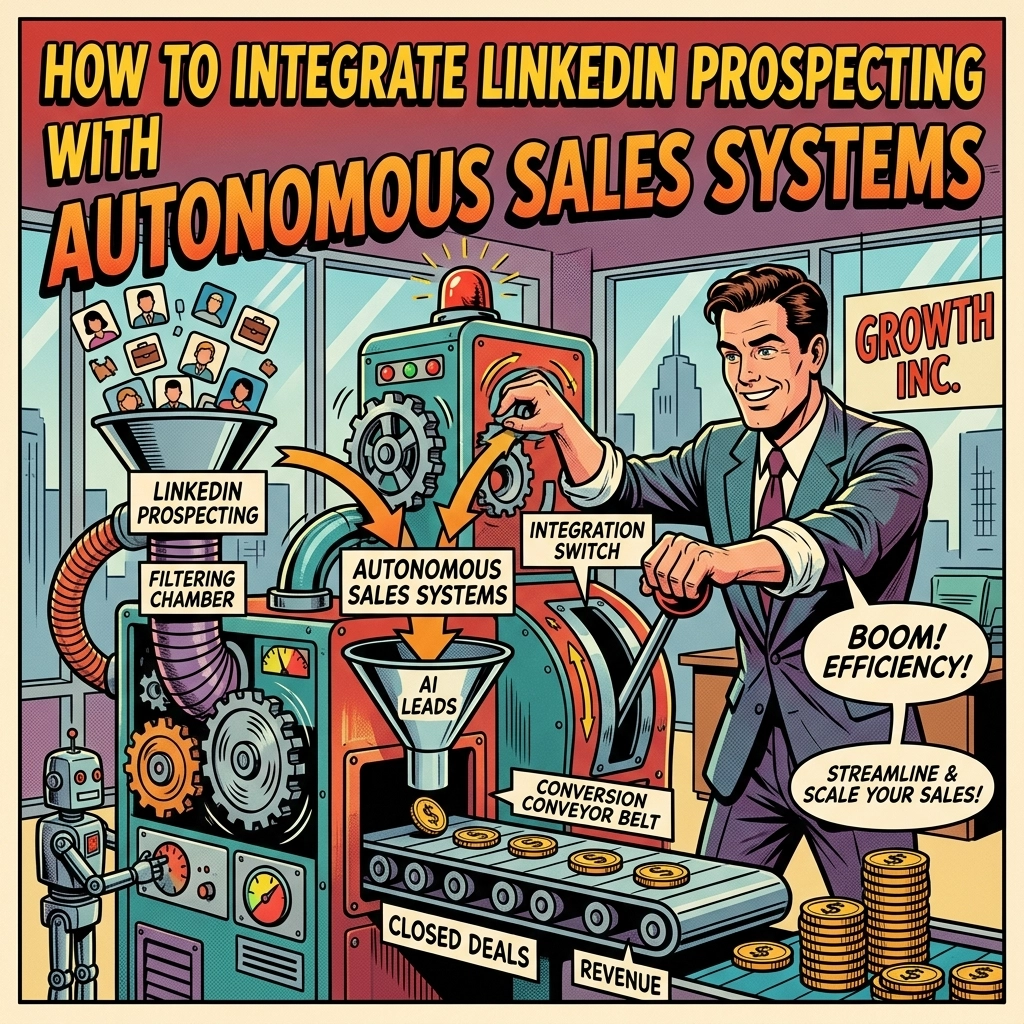
How to Integrate LinkedIn Prospecting With Autonomous Sales Systems
Let’s be honest: manually prospecting on LinkedIn is a grind. We’ve all been there, spending hours scrolling through "People You May Know," sending connection requests one by one, and trying to remember which lead said "follow up in three weeks" and which one told you to get lost.
In 2026, if your sales team is still doing this manually, you’re not just losing time; you’re losing market share. At Quality Lead Generation, we’ve seen a massive shift toward "autonomous sales systems." This isn't just a fancy buzzword for a chatbot; it’s about creating a self-sustaining engine that finds prospects, enriches their data, and engages them with personalized messaging, all while you’re focused on closing deals or growing your Vancouver business.
Whether you're a local general contractor looking for B2B contracts or a tech startup in Gastown, integrating LinkedIn with autonomous systems is the ultimate way to scale. Let’s dive into how you can build this "AI employee" stack.
Why Autonomy is the New Gold Standard
The old way of prospecting was "spray and pray." You’d buy a list, blast out a template, and hope for a 1% reply rate. The new way, the Quality Lead Generation way, uses intent signals.
Autonomous systems can monitor LinkedIn for specific triggers. Did a target company just get a fresh round of funding? Did your Ideal Customer Profile (ICP) just post about a problem you solve? An autonomous system catches these signals in real-time, allowing for "right time, right message" outreach that feels human, even when it’s powered by code.

1. Defining Your Operating Model
Before you hook up the tech, you need a blueprint. An autonomous system is only as smart as the instructions you give it.
Identify Your ICP and Triggers
You can’t just tell an AI to "find leads." You need to be surgical. We help our clients define:
- Firmographics: Industry, company size (SMB vs. Enterprise), and location (e.g., Greater Vancouver Area).
- Personas: Titles, seniority, and specific departments.
- Trigger Events: This is the secret sauce. Triggers include hiring spikes, job changes, or even specific keywords used in LinkedIn posts.
Set Your Guardrails
Autonomy doesn't mean "unsupervised." You need to decide what the system can do on its own and where a human needs to step in. For example, the system can handle initial discovery and follow-ups, but perhaps you want a human to review messages for high-value "whale" accounts.
2. The Core Architecture: The Four Layers of Success
To build a truly integrated system, you need to think in layers. At Quality Lead Generation, we specialize in building sales and marketing systems that connect these dots seamlessly.
Layer A: The Prospecting Layer (LinkedIn Sales Navigator)
Sales Navigator is your "feed." It’s the highest-quality database of professionals on the planet. By setting up saved searches and lead lists, you create a dynamic stream of data that feeds your autonomous engine.
Layer B: The Data & Intent Layer
A LinkedIn profile is just a start. You need business emails, direct dials, and intent data. Tools like Apollo or ZoomInfo act as the "enrichment" engine. When a new prospect enters your Sales Navigator list, the system automatically pulls their contact info and checks if they’re actually "in-market" for your services.
Layer C: The Automation & AI Agent Layer
This is where the magic happens. This layer features your "AI SDRs." We’re talking about agentic AI, autonomous do-ers like Orion, Atlas, and Vince, who don't just send emails; they think. They can classify replies (is it a "yes," a "maybe," or an "out of office"?) and trigger the next best action.

Layer D: The CRM Layer
Everything must flow into your CRM (HubSpot, Salesforce, etc.). This is your single source of truth. If a lead responds on LinkedIn, that activity should be logged in the CRM automatically. This ensures your PPC agency in Vancouver or your internal sales team always knows exactly where a lead stands.
3. Step-by-Step Implementation
Ready to build? Here is the workflow we often implement for our clients:
- Configure Sales Navigator: Build lead lists based on your ICP.
- Connect Enrichment: Use an API to push those leads into a data tool to find verified emails.
- Deploy the AI SDR: Drop those enriched leads into a multi-channel sequence.
- Step 1: A personalized LinkedIn connection request.
- Step 2: A "value-add" message 24 hours after acceptance.
- Step 3: A follow-up email if they don't respond on LinkedIn.
- Sync to CRM: Ensure every "Like," "Comment," and "Message" is tracked.

4. The "AI Employee" Advantage for Vancouver SMBs
You might be thinking, "I'm just a local plumber or a recycling business, do I really need AI employees?"
The answer is a resounding yes.
Small businesses in Vancouver are facing rising labor costs. Hiring a full-time SDR (Sales Development Representative) can cost $60k–$80k a year plus benefits. An autonomous sales system: powered by AI employees: operates 24/7, never calls in sick, and costs a fraction of a human salary.
For example, our work with B2B recycling and logistics clients often involves automating the outreach to industrial managers. The system finds the managers on LinkedIn, verifies their facility's needs, and books a meeting directly on the owner's calendar. That’s how you win in a competitive market like 2026.
5. Staying Out of "LinkedIn Jail"
One word of caution: LinkedIn is protective of its ecosystem. If you go from zero to 500 connection requests a day, you will get banned.
Autonomous systems must be "warm." We recommend:
- Starting with 20–30 connection requests per day.
- Using "human-like" delays between actions.
- Prioritizing quality over quantity. An AI-personalized message that mentions a specific project a prospect worked on will always outperform a generic blast.
As a leading google ads expert and digital marketing firm, we focus on high-intent strategies that keep your accounts safe while maximizing ROI.
6. Measuring Success: The Metrics That Matter
When you integrate LinkedIn with an autonomous system, you’ll start seeing a lot of data. Don’t get distracted by vanity metrics like "profile views." Focus on:
- Connection Acceptance Rate: Is your targeting right? (Aim for 25%+).
- Positive Reply Rate: Are your AI-generated messages resonating?
- Cost Per Meeting Booked: This is the ultimate metric for your bottom line.

Conclusion: Let Your System Do the Heavy Lifting
The goal of integrating LinkedIn prospecting with autonomous sales systems isn't just to be "high-tech." It’s to give you your time back. It’s to ensure that your pipeline is always full, even when you’re out on a job site or meeting with investors.
At Quality Lead Generation, we don't just give you the tools; we build the entire system for you. From high-converting web design to AI-powered sales teams, we help Vancouver businesses dominate their niches.
Ready to fire your manual prospecting habits and hire an autonomous system?
Book a meeting with us today and let’s talk about how we can put your lead generation on autopilot. Whether you need a Facebook ads agency in Vancouver or a full-scale AI SDR integration, Peter and the team are here to help you win.
